
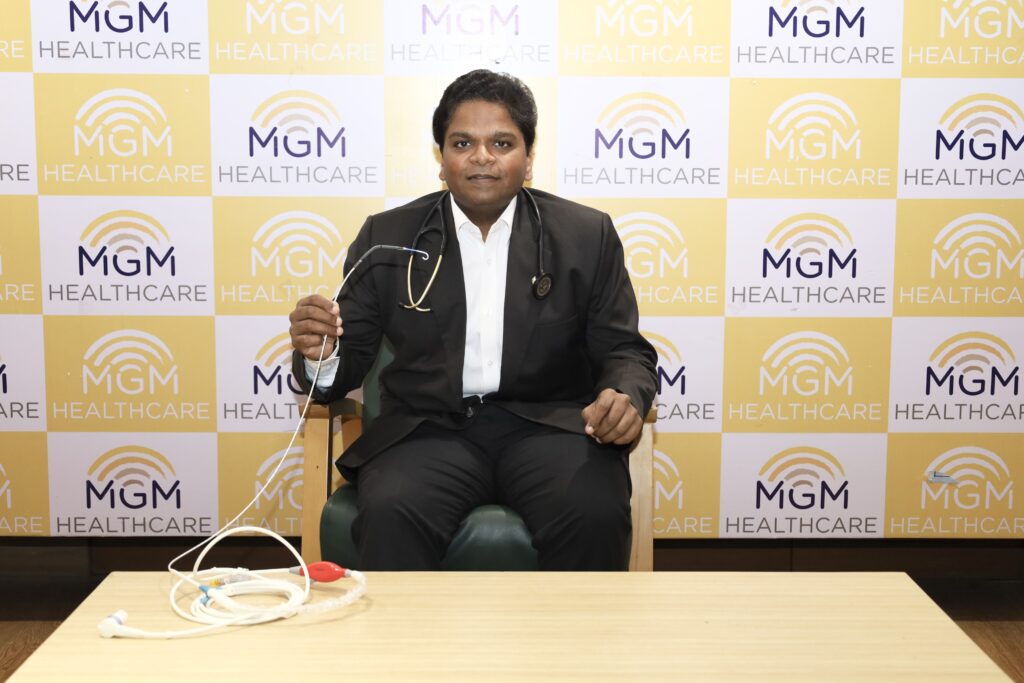
Chennai, June 24, 2026: Doctors at MGM Healthcare saved the life of a 69-year-old man who developed cardiogenic shock and suffered cardiac arrest during an emergency angioplasty by rapidly initiating Extracorporeal Membrane Oxygenation (ECMO), an advanced artificial heart and lung support system.
The patient had been admitted with ST-Elevation Myocardial Infarction (STEMI), one of the most severe forms of heart attack. He was found to have critical blockages involving the left main coronary artery and other major heart vessels. His condition was further complicated by cardiogenic shock, a life-threatening state in which the heart is unable to pump enough blood to meet the body’s needs.
During emergency angioplasty, the patient developed a life-threatening heart rhythm disturbance, followed by cardiac arrest and profound circulatory collapse. Although immediate cardiopulmonary resuscitation (CPR) successfully restored his heartbeat, he remained critically unstable. Doctors rapidly escalated support from an intra-aortic balloon pump (IABP) to ECMO.
An IABP is a balloon-based device that supports the heart by rhythmically inflating and deflating in the aorta, thereby improving coronary blood flow and reducing the workload on the heart. However, patients with severe cardiogenic shock or cardiac arrest often require a much higher level of support. ECMO circulates blood through an external machine, where it is oxygenated and then pumped back into the body, temporarily taking over much of the work of the heart and lungs. This near-complete circulatory support can sustain blood flow and oxygen delivery to vital organs even when the heart is unable to pump effectively on its own.
Once his circulation was stabilised, the team led by Dr Babu Ezhumalai successfully restored blood flow through the critically blocked coronary arteries using complex angioplasty and stent implantation. Despite requiring prolonged intensive care and multidisciplinary support, the patient gradually improved, was successfully weaned off ECMO, regained mobility and was eventually discharged home in stable condition.
Follow-up evaluations showed remarkable recovery of heart function, with his heart’s pumping capacity improving from complete standstill following cardiac arrest to a normal ejection fraction of 53%, enabling him to return to an active daily life.
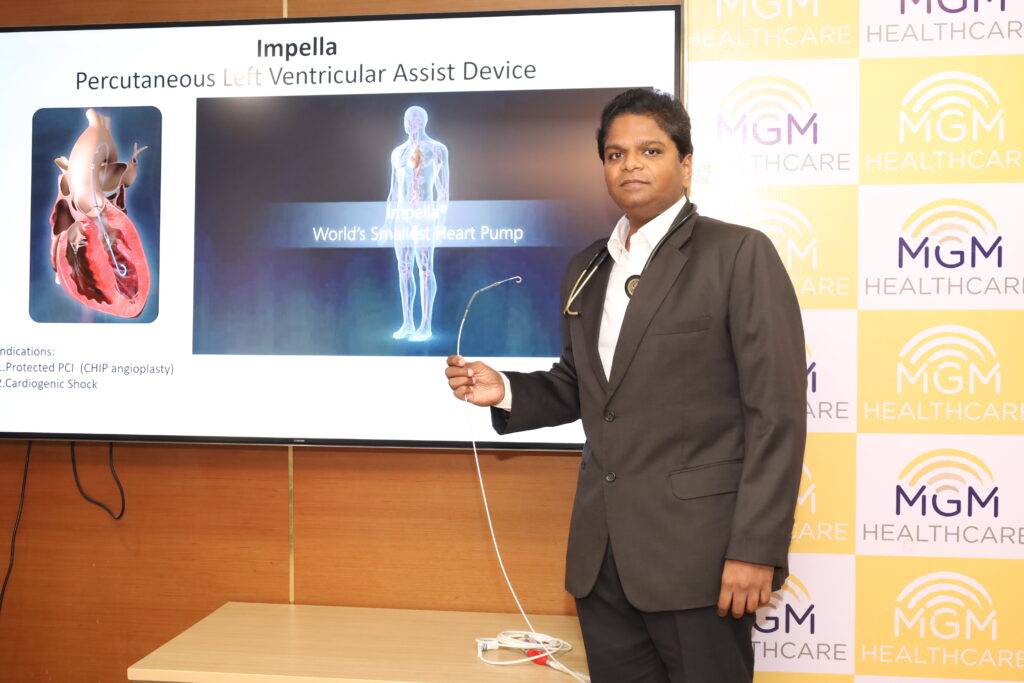
In his comments, Dr Babu Ezhumalai said, “Modern heart care is undergoing a significant transformation with the increasing use of advanced Mechanical Circulatory Support (MCS) technologies during complex and high-risk coronary interventions. Devices such as Impella and Extracorporeal Membrane Oxygenation (ECMO) are helping doctors safely perform life-saving procedures in patients who, until recently, were often considered too sick or too high-risk for treatment. Many patients who were considered unsuitable for complex coronary intervention can now be treated successfully with modern circulatory support technologies. They increase both the survival and recovery rate of high-risk patients.”
He added: “Advanced Mechanical Circulatory Support (MCS) devices enable cardiologists to perform complex high-risk angioplasty in patients with severe coronary artery disease, poor heart function, cardiogenic shock, and other life-threatening conditions that previously carried a very poor prognosis. The benefits extend beyond survival alone. By restoring blood flow early and supporting circulation during critical periods, these technologies can allow the heart muscle to recover, resulting in significant improvement in cardiac function and quality of life.”